

There are certain neighborhoods that deserve to be explored on foot. Harbor Oaks, situated just south of downtown Clearwater along the eastern shore of Clearwater Harbor, is one of them. From behind the wheel of a car, it is easy to appreciate the beautiful homes, mature oak trees, and carefully landscaped properties. Walking its streets, however, reveals something considerably more interesting: a residential community conceived more than a century ago with an extraordinary degree of thought given to its architecture, infrastructure, landscaping, and relationship with the waterfront.
I recently spent an afternoon photographing Harbor Oaks, taking my time along its residential streets, studying the architectural details of individual homes, and eventually making my way toward Magnolia Drive Dock. I have known the neighborhood for years through my work in real estate, but there is a difference between knowing where a neighborhood is and understanding the circumstances that brought it into existence. My interest in history has always encouraged me to look beyond the buildings themselves, and Harbor Oaks offered an opportunity to examine an unusually ambitious chapter in Clearwater’s development.
What makes this neighborhood particularly fascinating is that its historic character was never entirely accidental. While many older communities evolved gradually as individual houses appeared along existing roads, Harbor Oaks was conceived as a planned residential development. Its designer and developer understood that a desirable neighborhood required more than attractive homes. The streets, public improvements, landscaping, lot arrangements, and protections governing future construction were all essential parts of the vision.
More than a century later, much of that original thinking remains visible.
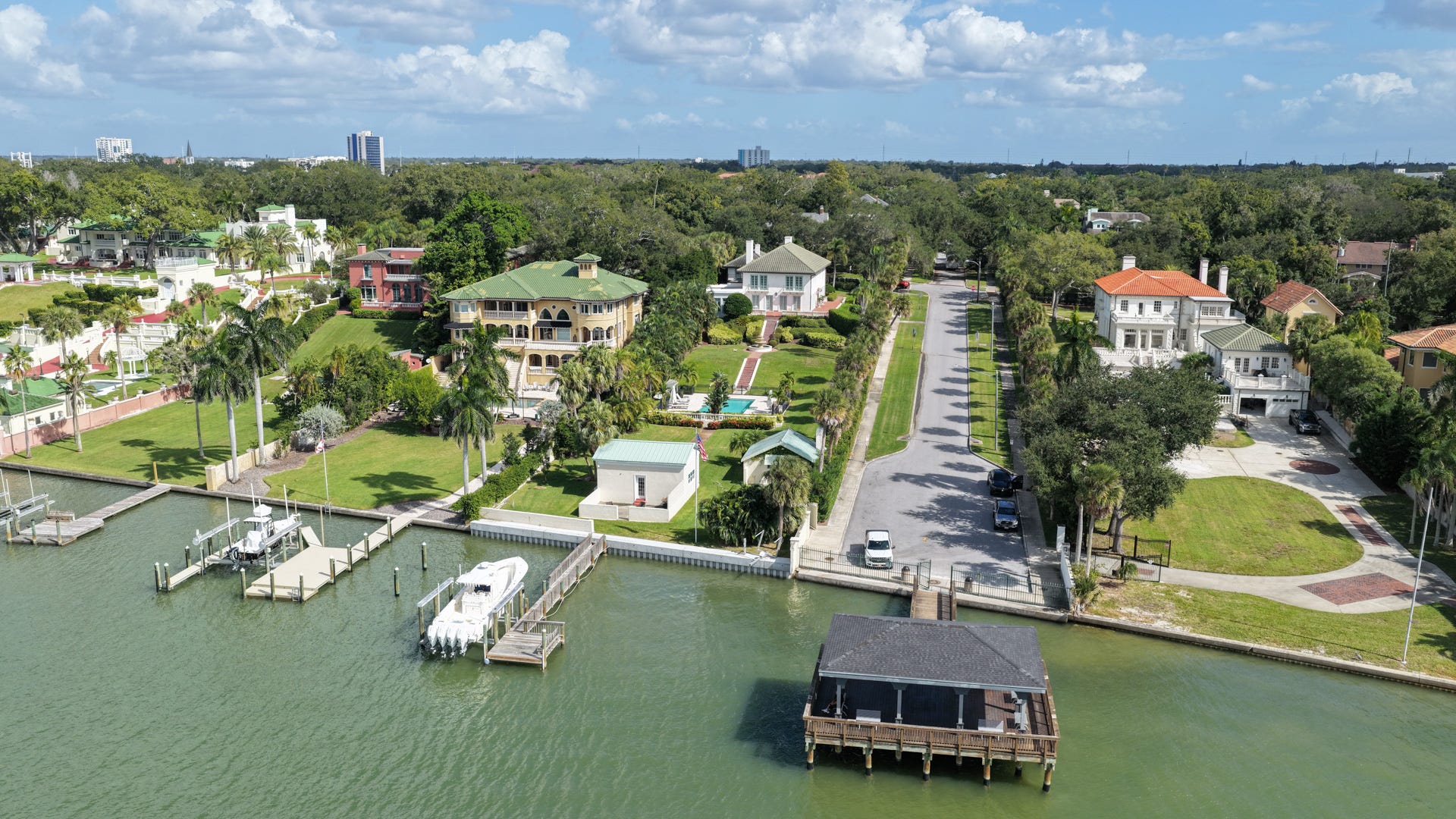
Harbor Oaks occupies a remarkable setting along Clearwater Harbor, where waterfront estates and established residential streets reflect more than a century of development. Photograph by Mark Middleton.
A Vision for Clearwater’s Future
In 1914, Clearwater was still a relatively young and developing Florida community. Pinellas County had been established only three years earlier, and the tremendous population growth that would transform the Gulf Coast during the twentieth century was still largely in the future. Although the area was attracting residents and visitors, much of the surrounding landscape remained agricultural or undeveloped.
It was against this backdrop that Dean Alvord, an experienced real estate developer from New York, introduced Harbor Oaks. Alvord brought with him an understanding of residential planning that had already influenced development in the Northeast. He recognized the potential of Clearwater’s waterfront landscape and envisioned a neighborhood that would appeal to buyers seeking an attractive winter residence or a permanent home in Florida’s increasingly desirable climate.
The development was remarkably progressive for its time. Harbor Oaks offered paved streets, curbs, sidewalks, underground utilities, sewer infrastructure, and landscaped parkways. These were not universal features of early twentieth-century residential development, particularly in communities experiencing rapid growth without comprehensive municipal planning regulations.
Alvord also employed deed restrictions intended to preserve the neighborhood’s residential character. Those restrictions governed various aspects of land use and construction, helping establish a consistent approach to development while allowing for considerable architectural individuality.
The result was something different from the subdivisions we commonly encounter today. Harbor Oaks was designed to create a particular residential environment, one in which individual homes contributed to a larger landscape rather than standing as unrelated structures on neighboring parcels.
Contemporary promotional material described the development as the “Riviera of the Sunny South,” an ambitious comparison intended to associate Clearwater with the elegance of established coastal destinations. The historical marker at the neighborhood’s entrance preserves that language, along with the original claim that Harbor Oaks represented one of the finest waterfront developments on Florida’s west coast.
The descriptions were unmistakably promotional, but the underlying ambition was real. Alvord was not simply selling land. He was selling a carefully considered vision of how people might live.
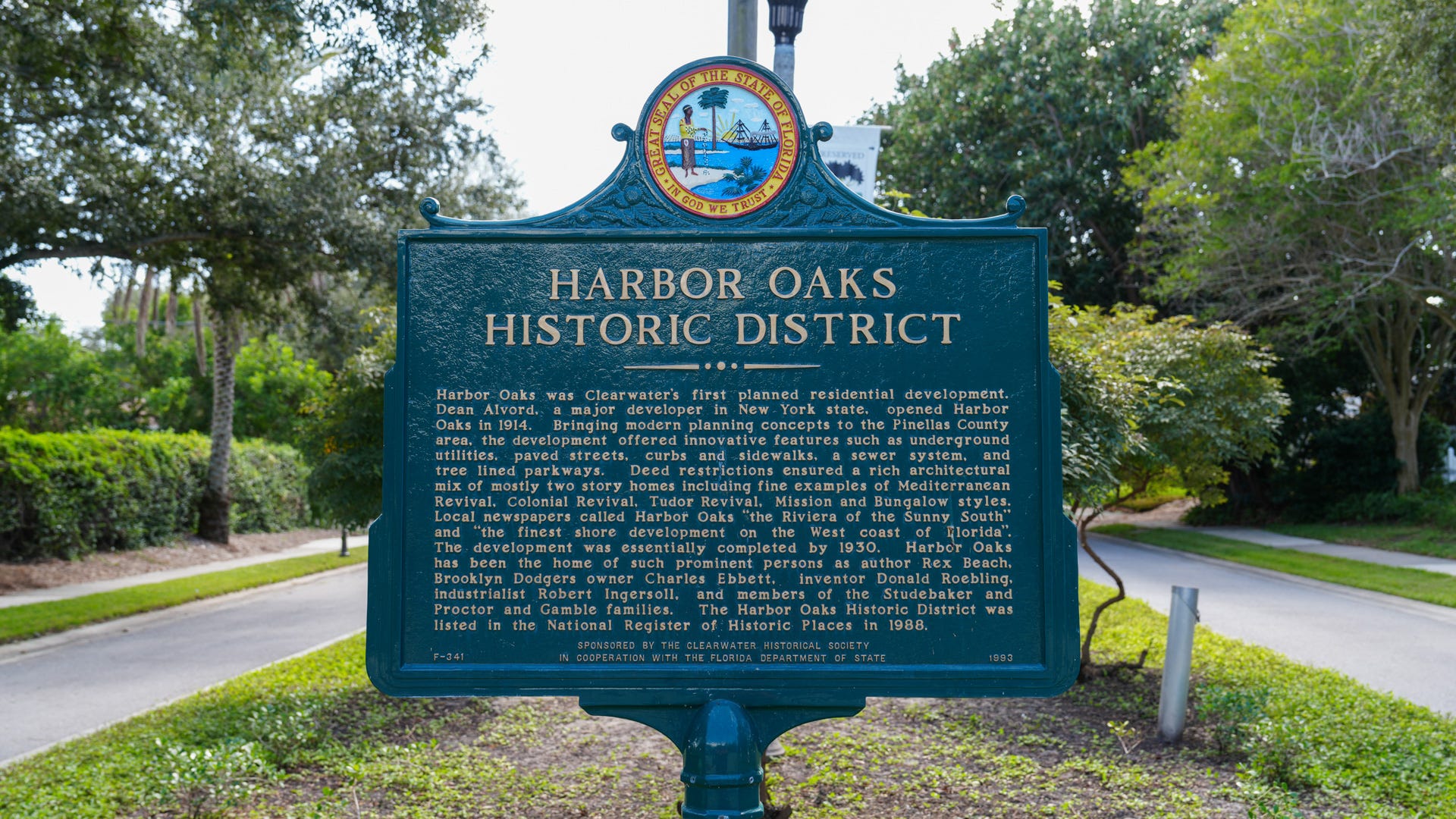
The Harbor Oaks historical marker documents Clearwater’s first planned residential development and the innovative planning principles introduced in 1914. Photograph by Mark Middleton.
When the Street Itself Becomes Part of the Architecture
One of the first things I noticed while photographing Harbor Oaks was the generosity of its streetscape. Mature oak trees form an overhead canopy, broad lawns separate houses from the street, and sidewalks encourage a slower appreciation of the neighborhood. The landscaping softens the substantial architecture, allowing large residences to feel comfortably situated within their surroundings.
This was an intentional part of the original planning concept. The National Register of Historic Places documentation describes the broad streets, parkways, sidewalks, and established plantings that contribute to the neighborhood’s character. Many of its palms and oaks were planted during the development’s earliest years, making the landscape itself an important historical feature.
A century of growth has given those trees a presence that could never be duplicated simply by planting new ones. Their branches frame the houses, create patterns of light and shadow across the sidewalks, and influence the way each property is experienced. I found myself photographing not only individual homes but also the spaces between them, where the original planning is often most apparent.
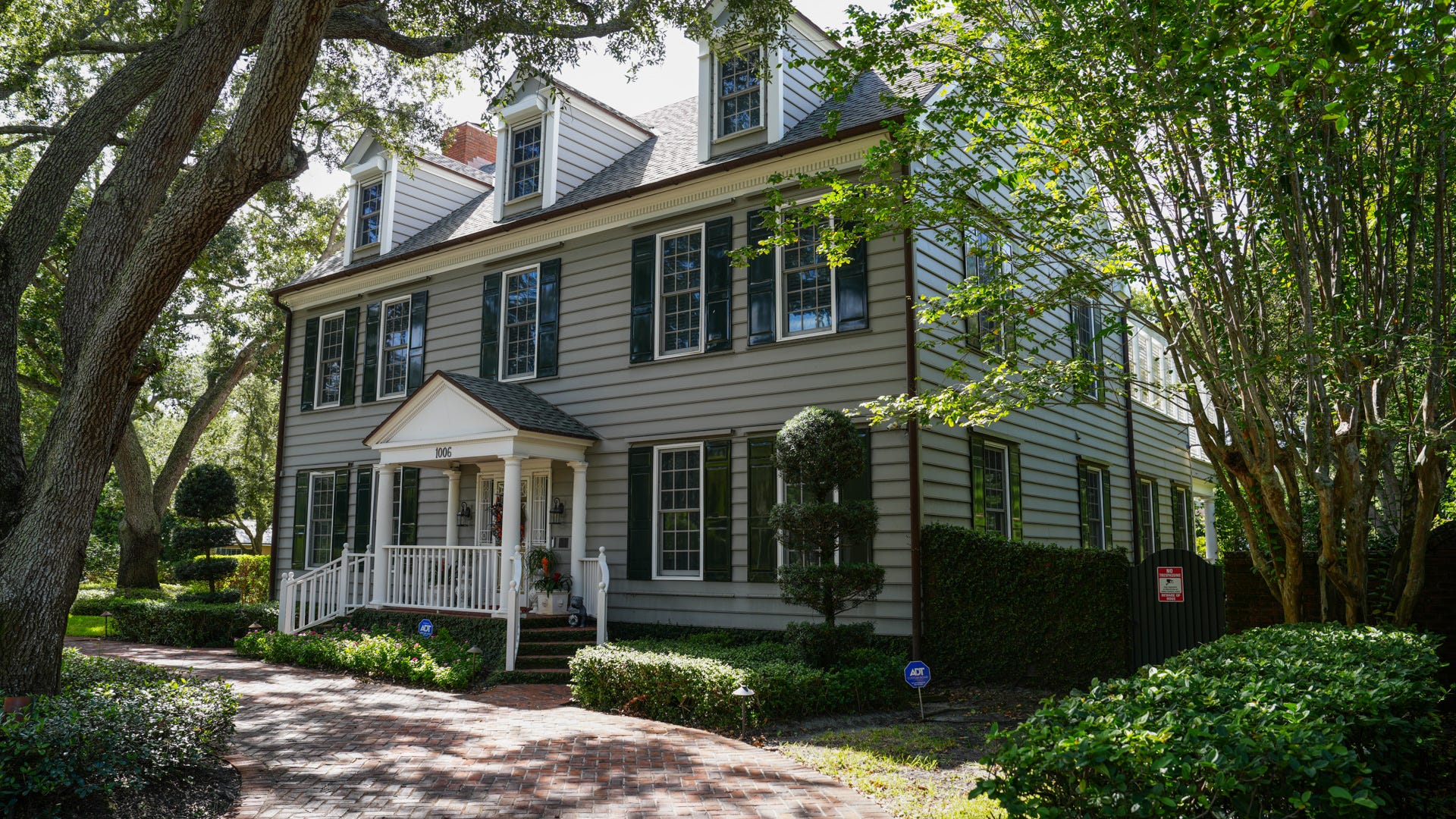
The neighborhood’s architecture is equally compelling. Harbor Oaks includes examples of Colonial Revival, Mediterranean Revival, Tudor Revival, Mission, Prairie-influenced, and bungalow design. Although many houses share the substantial proportions associated with early twentieth-century residential architecture, their individual appearances can vary dramatically.
The Colonial Revival homes often emphasize symmetry, classical details, and carefully organized entrances. Mediterranean and Mission-influenced residences introduce stucco surfaces, arched openings, and architectural forms associated with Florida’s interest in Spanish and Mediterranean precedents. Tudor Revival houses employ steeper rooflines, decorative masonry, and an altogether different architectural vocabulary, while bungalows reflect the practical residential design traditions popular during the same period.
That variety gives Harbor Oaks much of its appeal. The neighborhood does not feel like a collection of houses designed to satisfy a single architectural formula. Instead, the underlying street plan creates a sense of order while allowing individual properties to express different styles and personalities.
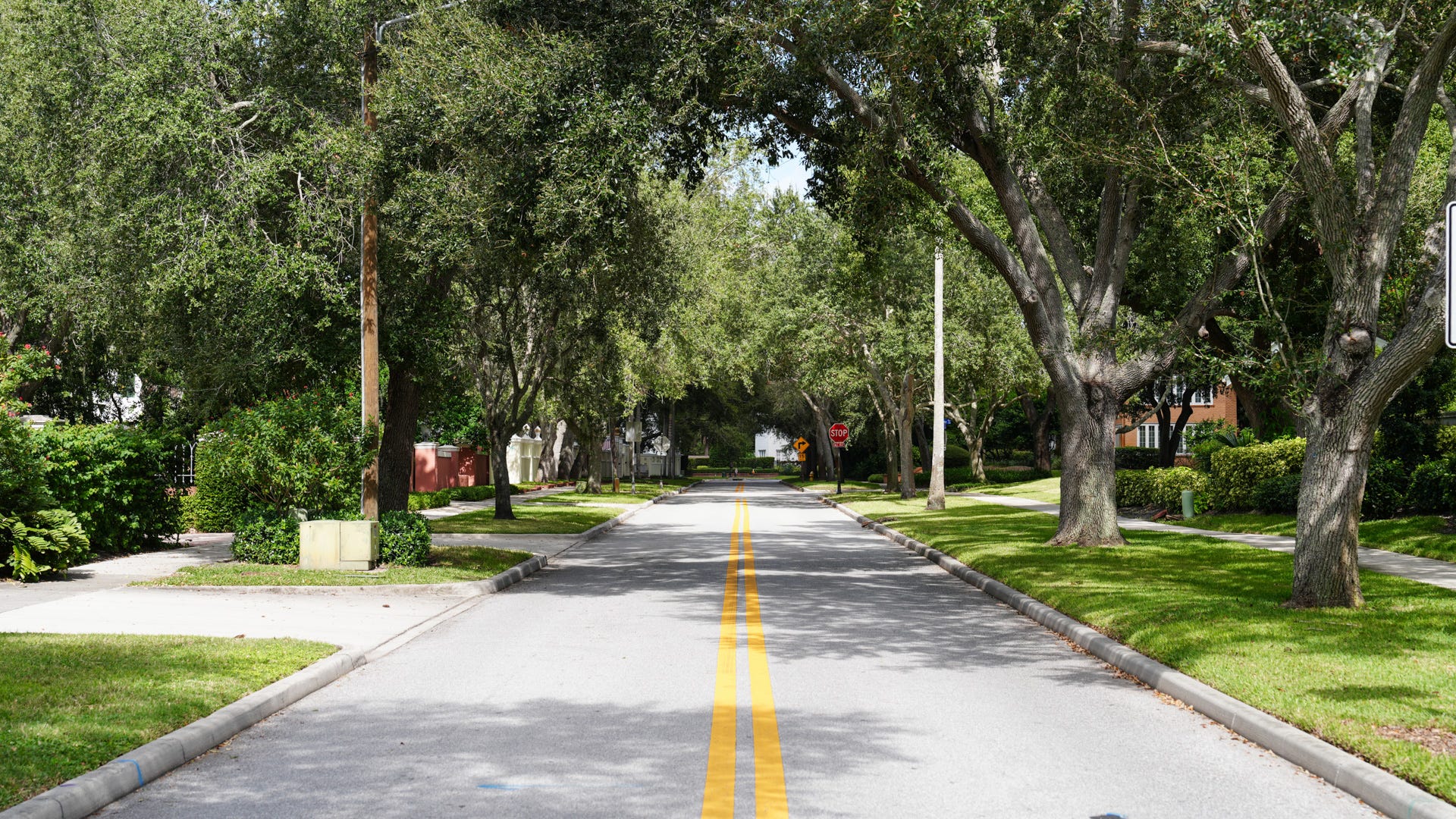
The streets of Harbor Oaks remain among the neighborhood’s defining historical features, with mature trees, substantial setbacks, and landscaped parkways contributing to its character. Photograph by Mark Middleton.
As someone who has photographed historic neighborhoods throughout Tampa Bay, I find that architecture is best understood in context. A building may be impressive on its own, but its relationship to neighboring houses, streets, landscaping, and natural surroundings tells a more complete story. This is particularly true of Harbor Oaks, where the original development concept remains visible in the arrangement of the neighborhood itself.
The historic district was added to the National Register of Historic Places in 1988, recognizing its significance in community planning, architecture, and social history. Its protected historical identity reflects not only the individual residences but also the larger environment in which those residences were built.
The People Who Made Harbor Oaks Their Home
During the early twentieth century, Florida was increasingly attracting affluent winter residents from northern states. The state’s climate, growing transportation connections, and opportunities for residential development inspired a wave of interest that would culminate in the extraordinary Florida land boom of the 1920s.
Harbor Oaks emerged during that period of changing perceptions. Clearwater was no longer merely a small coastal settlement; it was becoming an attractive destination for people who could choose among many emerging winter communities.
The neighborhood eventually became associated with several prominent figures from business, literature, invention, and professional sports. Author Rex Beach, inventor Donald Roebling, industrialist Robert Ingersoll, and Brooklyn Dodgers owner Charles Ebbets are among those identified in its historical records. Members of families associated with Studebaker and Procter & Gamble were also residents.
Another early resident was writer Sewell Ford, whose winter home was known as Casa de San Antonio. His decision to establish a residence in Harbor Oaks was part of the neighborhood’s early appeal to people of national prominence.
These names provide an interesting glimpse into Clearwater’s changing position during the first decades of the twentieth century. The community was attracting individuals with considerable financial resources and national connections, many of whom were seeking the advantages of Florida living while retaining the comforts and architectural expectations of their northern homes.
Yet the significance of Harbor Oaks extends beyond the prominence of its former residents. Their presence reflects the ambitions of a developing city and the influence of a residential neighborhood deliberately planned to attract investment, encourage substantial construction, and establish a lasting reputation.
Florida’s land boom eventually collapsed, and the Great Depression brought substantial economic challenges. Harbor Oaks, however, continued to develop through the 1920s and into the following decade, leaving behind an architectural collection that documents several phases of early twentieth-century residential design.
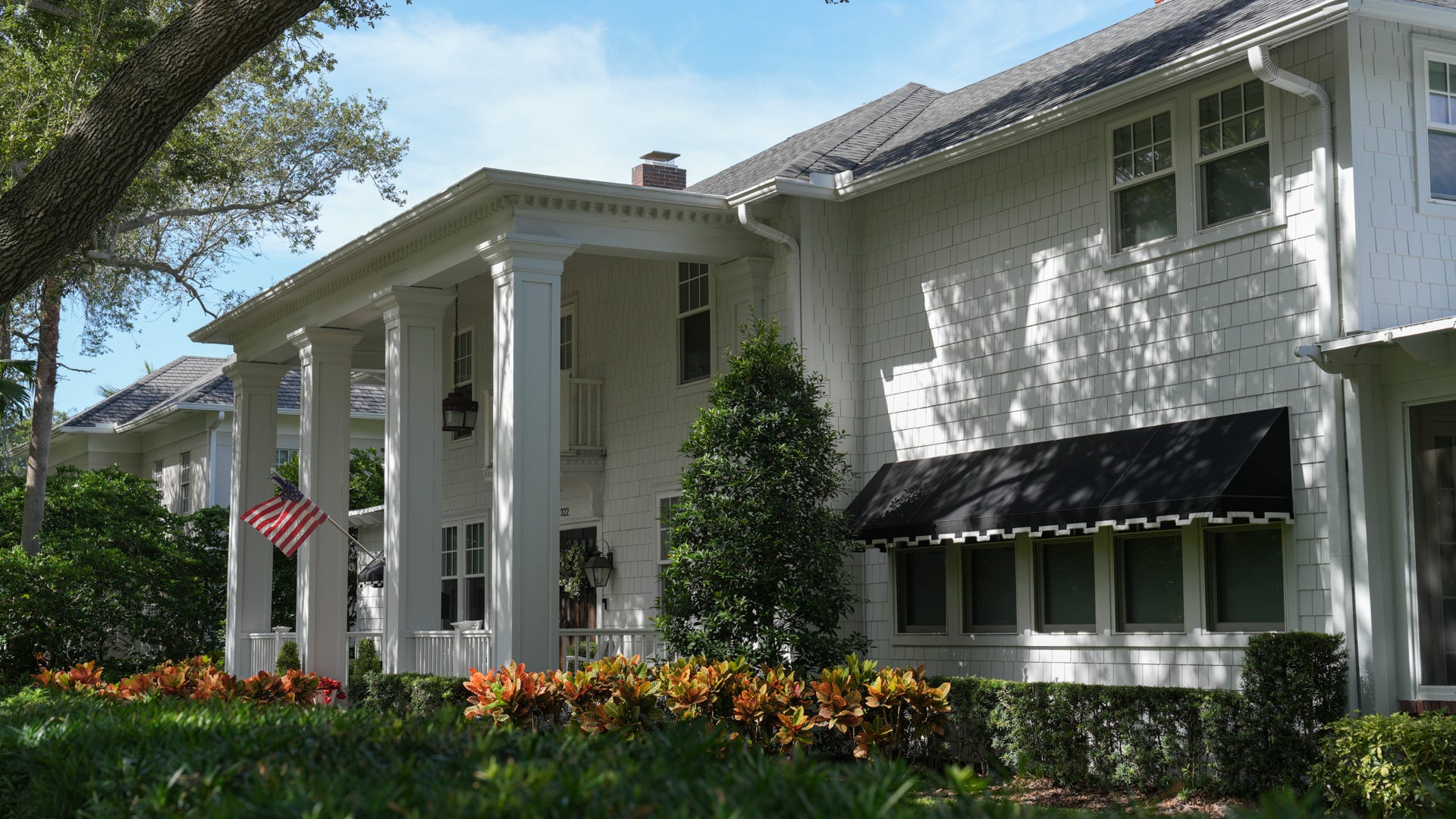
The architectural variety of Harbor Oaks reflects the ambitions and individual tastes of the residents who built homes here during the early twentieth century. Photograph by Mark Middleton.
The Waterfront That Shaped the Neighborhood
Although Harbor Oaks is celebrated for its architectural character, its waterfront location was essential to its original appeal. The neighborhood occupies an elevated setting overlooking Clearwater Harbor, and the properties closest to the water were designed to take particular advantage of the views and access.
From the air, the relationship between the residential district and the harbor becomes strikingly apparent. Some waterfront parcels extend considerably farther from the street than the interior lots, providing space for extensive grounds, gardens, swimming pools, and private docks. The larger estates have a scale that distinguishes them from many other residential properties in Clearwater.
The original National Register documentation describes a noticeable difference between interior and waterfront parcels, reflecting the importance placed on the harbor frontage during the neighborhood’s development.
This arrangement also contributes to Harbor Oaks’ unusual identity. It is simultaneously a historic residential district and a neighborhood containing some of Clearwater’s most distinctive waterfront properties. Its appeal cannot be explained solely through architectural style, and neither can it be understood simply as a luxury waterfront location.
The two characteristics have evolved together.
I find aerial photography especially valuable in documenting neighborhoods like Harbor Oaks because it reveals details that are difficult to appreciate from the street. The relationship between lot sizes, waterfront orientation, tree cover, and the surrounding city becomes easier to understand. Features that appear unrelated at ground level are revealed as parts of a carefully organized landscape.
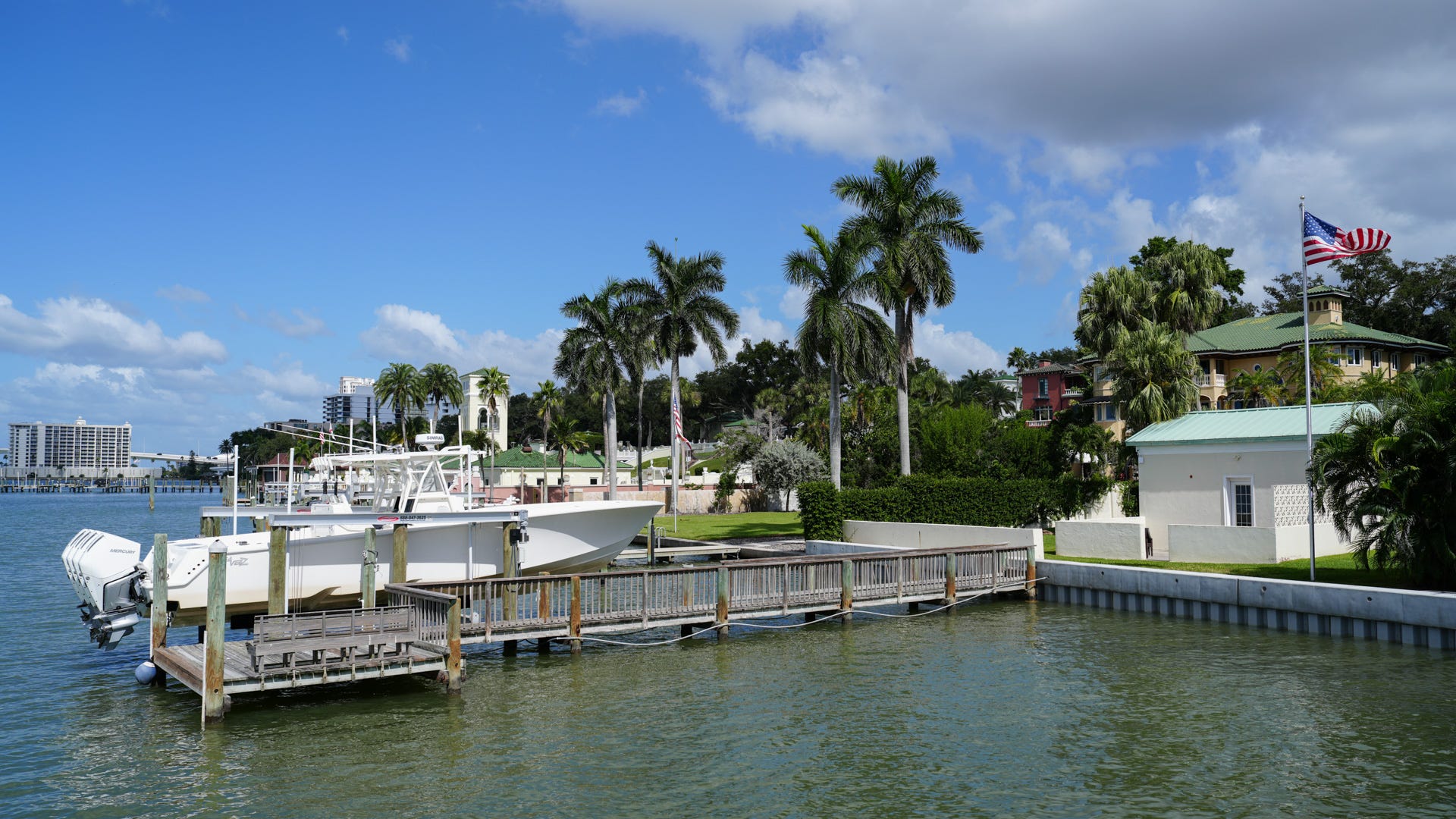
The waterfront estates of Harbor Oaks reveal the scale and arrangement of properties developed along Clearwater Harbor. Aerial photograph by Mark Middleton.
One of the most meaningful places to appreciate the neighborhood’s waterfront history is Magnolia Drive Dock.
The dock has long served as a gathering place for Harbor Oaks residents. According to its commemorative plaque, the original structure was constructed around 1925 and became the setting for activities as varied as fishing, neighborhood celebrations, weddings, and afternoons spent enjoying the harbor.
It was destroyed during the March 1993 storm widely remembered as the Storm of the Century, an event that caused extensive damage throughout Florida’s Gulf Coast. The dock was subsequently reconstructed, allowing a familiar neighborhood gathering place to continue serving residents.
During my recent visit, I spent time photographing the dock and the view across the water. What interested me was not simply the structure itself but the history of ordinary experiences associated with it. Families gathered there, neighbors celebrated important occasions, and generations of residents watched the changing light over Clearwater Harbor.
Buildings and monuments tend to receive much of the attention when we discuss historic preservation, yet modest community spaces can carry equally meaningful associations. The importance of a dock is not measured solely by its construction date or architectural design. It also rests in the memories created there and the relationships it helped sustain.
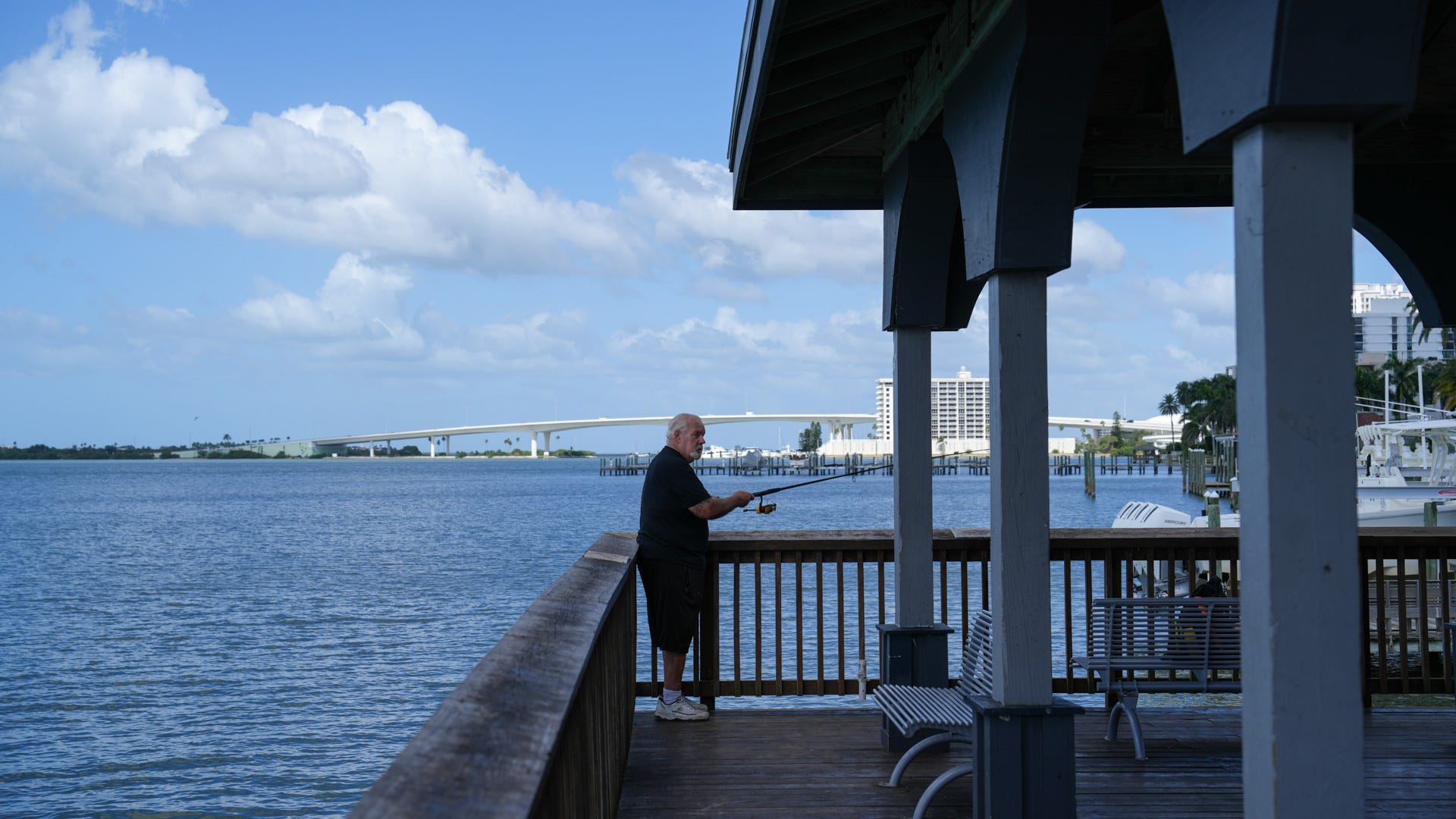
Magnolia Drive Dock has served as a neighborhood gathering place for generations, connecting the residential community with Clearwater Harbor. Photograph by Mark Middleton.
The history of the dock also reminds us that preservation is not always a matter of retaining an original structure. Sometimes it involves rebuilding something that has been lost because its role in community life remains important.
The Older History Beneath Harbor Oaks
Harbor Oaks occupies land whose history reaches beyond the development of 1914. The area is connected to Fort Harrison, a military post established in 1841 during the Second Seminole War.
The fort stood on elevated ground overlooking the water and was occupied for a relatively brief period before being abandoned later that year. Its site was subsequently commemorated by a historical marker, preserving a reminder of Clearwater’s nineteenth-century military history.
The wider history of the Seminole Wars involves the forced removal of Indigenous peoples, resistance to federal military campaigns, and the expanding occupation of Florida by the United States. Understanding this context is important when considering the role of a military post established during that period.
A location that would later become associated with wealthy winter residents and carefully landscaped residential streets had previously been part of a much more complicated chapter in Florida’s development.
This layering of history is one of the reasons I enjoy researching older neighborhoods. A historical district designation may emphasize a particular period, but the land itself often holds associations that extend far beyond the surviving buildings.
Harbor Oaks is primarily recognized for its twentieth-century architecture and planning, yet its location offers a connection to earlier events that contributed to the development of Clearwater and the surrounding region.
Preservation and the Value of a Neighborhood’s Character
Harbor Oaks’ inclusion on the National Register of Historic Places in 1988 acknowledged the significance of its residential architecture and original planning. Yet recognition alone does not ensure that a neighborhood will retain its character indefinitely.
Historic districts are living communities, not museums. Houses require maintenance, families move, properties undergo renovations, and the surrounding city continues to change. These changes are inevitable, and in many cases necessary.
The challenge is preserving the qualities that make a neighborhood distinctive while allowing its buildings to remain practical and desirable places to live.
In Harbor Oaks, those qualities extend beyond the homes themselves. The mature landscaping, setbacks, streets, waterfront setting, and relationships among neighboring properties are all part of its historic character. Altering enough of these elements can change the experience of the neighborhood even when many original houses remain standing.
I was particularly interested in the preservation banners displayed during my recent visit, which reflect the continued attention residents and community organizations have given to Harbor Oaks’ historical identity.
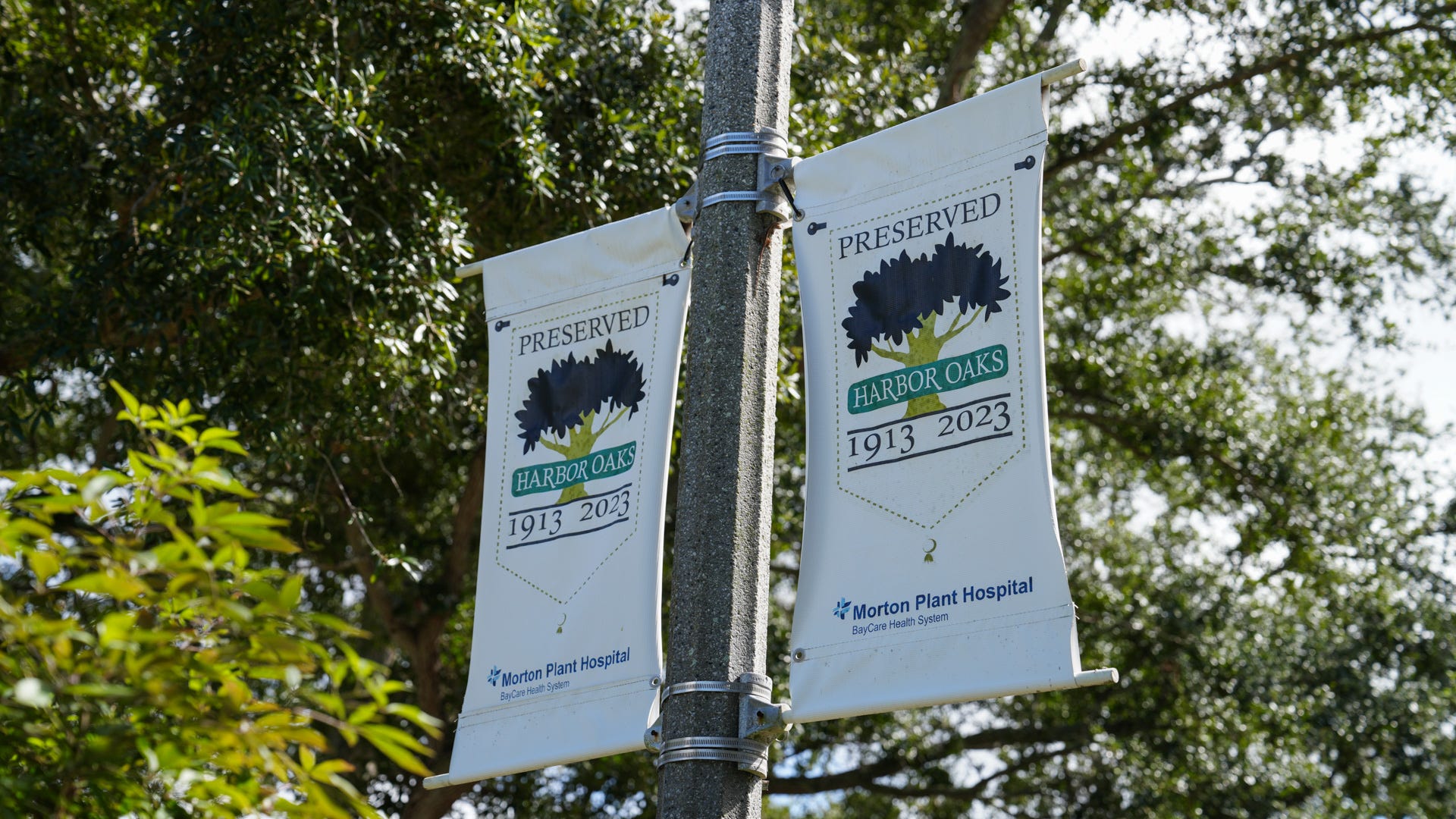
Preservation remains an important part of the Harbor Oaks story, more than a century after the neighborhood’s development began. Photograph by Mark Middleton.
Preservation is often described as an effort to protect the past, but I believe it is equally concerned with the future. The decisions made about older neighborhoods today will influence what later generations inherit, just as the choices made by Dean Alvord and Harbor Oaks’ earliest residents continue to shape the community.
As a Realtor, I also recognize the practical complexity of owning a historic property. Older houses may contain craftsmanship and architectural details that are difficult to reproduce, but they can also present challenges involving renovations, maintenance, insurance, building systems, and compliance with applicable regulations.
A National Register listing does not automatically impose the same restrictions as a local historic designation. Buyers and owners need to understand the rules that apply to a particular property rather than assuming that every historic home is subject to identical requirements.
The distinction is important because thoughtful preservation requires accurate information and a practical understanding of the building being preserved.
For readers interested in the architecture and real estate considerations of Harbor Oaks, I recently published a more detailed neighborhood study on Historic Homes Tampa Bay. That article examines the neighborhood’s planning, architectural styles, waterfront properties, and considerations for those interested in owning a historic residence.
Why Harbor Oaks Matters to Clearwater
When people outside our region think of Clearwater, their first association is often Clearwater Beach. Its white sand, Gulf waters, and tourism industry have made it internationally recognizable, but that familiar image represents only part of the city’s history.
Clearwater has a substantial architectural and cultural heritage on the mainland, including neighborhoods that developed long before the region acquired its modern identity as a major visitor destination.
Harbor Oaks offers an especially compelling example.
It reflects a period when Clearwater was positioning itself as a desirable residential community, attracting people who saw opportunities in the region’s climate, waterfront, and expanding economy. Its planning introduced ideas that were progressive for their time, while its architecture captured the tastes and aspirations of residents who helped shape the city during its formative decades.
What I appreciate most about Harbor Oaks is that its historical significance remains evident without requiring much imagination. The streets are still there. Many original residences survive. Mature trees continue to frame the homes, and the waterfront remains central to the neighborhood’s character.
Walking through Harbor Oaks, I found myself thinking about the considerable distance between the Clearwater of 1914 and the city we know today. The surrounding region has undergone extraordinary changes, yet this relatively compact neighborhood continues to preserve a recognizable expression of the ideals that inspired its development.
There is considerable value in that continuity.
A Walk Worth Taking
I often encourage people interested in historic homes to spend time exploring the neighborhoods where those houses stand. Photographs, property descriptions, and historical documents provide valuable information, but they cannot fully communicate the experience of walking beneath mature trees, noticing architectural details, or understanding how a neighborhood fits into the surrounding landscape.
Harbor Oaks rewards that kind of attention.
During my recent visit, I found myself returning repeatedly to the relationship between individual homes and the streets around them. There is a sense of proportion and continuity that is difficult to capture in a single photograph. The established trees, landscaped parkways, architecture, and waterfront setting work together in ways that reveal the sophistication of the original plan.
I left with a deeper appreciation for the neighborhood than I had when I arrived, and a better understanding of why its history deserves to be documented.
That is also why I continue photographing and writing about Tampa Bay’s historic communities. My interest extends beyond identifying attractive houses or explaining their architectural styles. I want to understand why these neighborhoods developed, who helped shape them, and what their survival tells us about the communities we value today.
Harbor Oaks is more than a collection of beautiful historic residences. It is an enduring example of early residential planning, a reflection of Clearwater’s development during the twentieth century, and a neighborhood whose architectural character remains inseparable from its landscape and waterfront.
More than a century ago, its developers promoted Harbor Oaks as the Riviera of the Sunny South. The language may belong to another era, but the ambition behind it is still apparent.
The neighborhood was designed to be exceptional, and much of what made it exceptional in 1914 continues to define it today.
About the Author
Mark A. Middleton is a Tampa Bay Realtor with Middleton Tampa Bay | Compass, a historian with a degree from the University of South Florida, and a photographer and filmmaker. His writing explores the architecture, neighborhoods, history, and people that give Florida’s Gulf Coast its distinctive character.
Through Historic Homes Tampa Bay, he documents the region’s historic residential architecture and neighborhoods. His primary real estate website, Middleton Tampa Bay, provides information about buying and selling homes throughout Clearwater, Dunedin, St. Petersburg, Tampa, and the surrounding communities.
Historical Sources and Further Reading
Florida Division of Historical Resources — Harbor Oaks Historic District
Harbor Oaks: The Riviera of the Sunny South — Historic Homes Tampa Bay
If you enjoy exploring the history, architecture, and distinctive communities of Tampa Bay, I invite you to subscribe to The Journal at Middleton Tampa Bay. I write about the places we call home, the stories that shaped them, and the people who continue to preserve their character.
I also welcome historical photographs, family memories, and stories from readers with personal connections to Harbor Oaks. Local history becomes more meaningful when the experiences of those who lived it are preserved alongside the public record.