

Four feet of water in my office
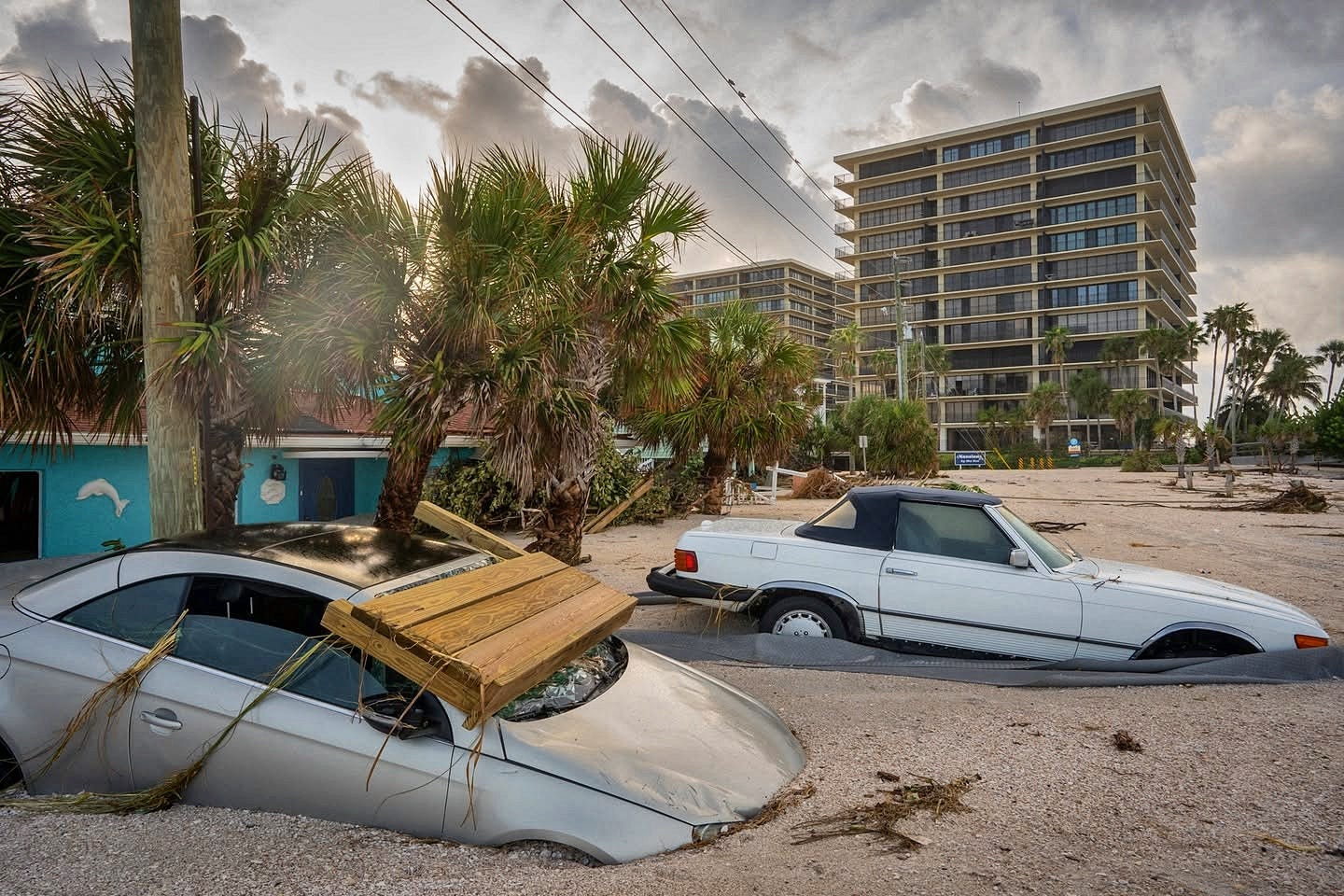
The morning after Hurricane Helene, I opened the door to my office just off Bayshore Boulevard in Dunedin and found the waterline about four feet up the wall. The Gulf had come inside and risen over the top of the printer.
I had already seen the first sign at 6 a.m. I woke up, picked up my phone and opened Facebook, and there were people kayaking down Bayshore Boulevard. I could not believe what I was seeing.
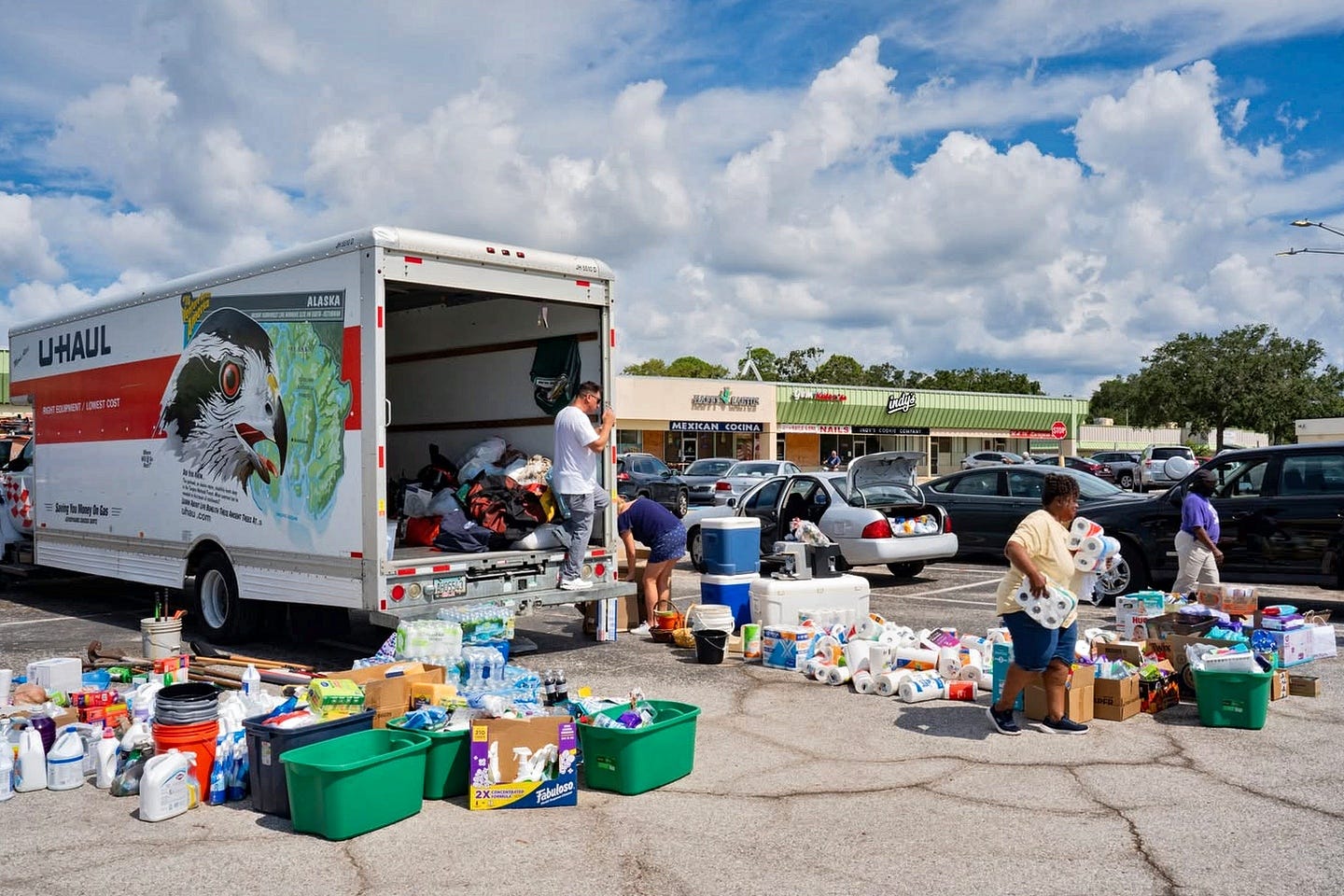
The next day we went searching for Teresa, one of the women in my Rotary club. She had been walking around her neighborhood. Her home, where she had lived for forty years, was completely destroyed.
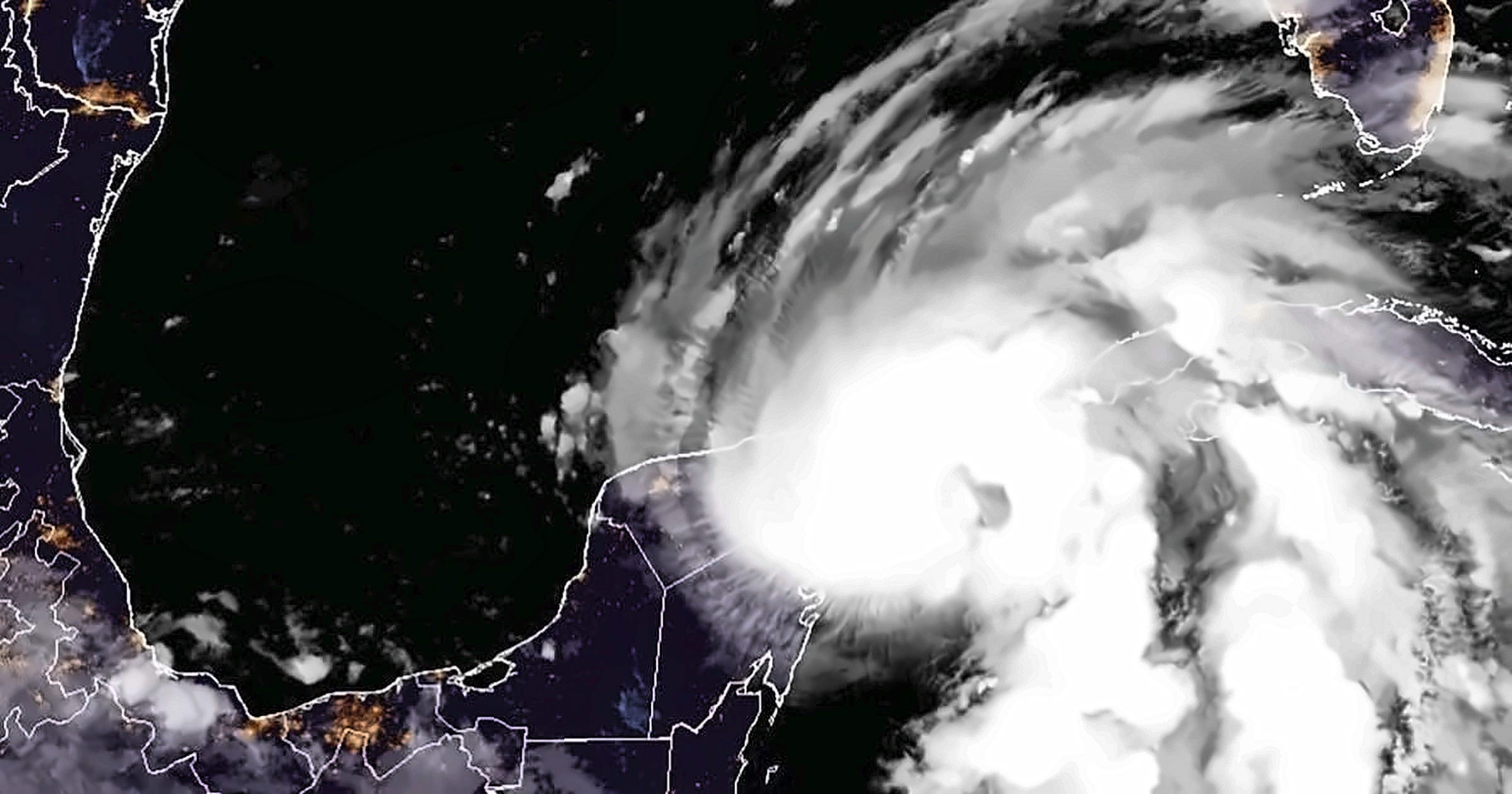
None of us had ever seen water that high in our city. Almost no one alive had. Helene never even made landfall here. It passed well offshore on the night of September 26, 2024, on its way to the Big Bend, and it still hit the Tampa Bay area harder than any hurricane in 103 years. The last storm surge like it came in 1921, when the Tampa Bay hurricane made landfall near Tarpon Springs and cut straight through Hog Island. The channel it carved became Hurricane Pass. Hog Island became two islands, Caladesi and Honeymoon.
Helene changed a lot of things about life here. Living in Dunedin. Living on the Gulf Coast. Living on the barrier islands of Pinellas County.
Two years later, buyers call me about waterfront homes almost every week. Many are relocating from places where a hurricane is something you watch on the news. Some lived here through Helene and Milton and want to move higher, or closer to the water, or both. Almost all of them ask a version of the same question. Is it still smart to buy on the water in Pinellas?
My honest answer is yes, for the right house, bought the right way. The market did not collapse. It sorted itself. And the sorting follows rules most buyers have never heard of.
What the two storms actually did
The numbers are worth getting right, because a lot of what gets repeated at dinner parties is wrong.
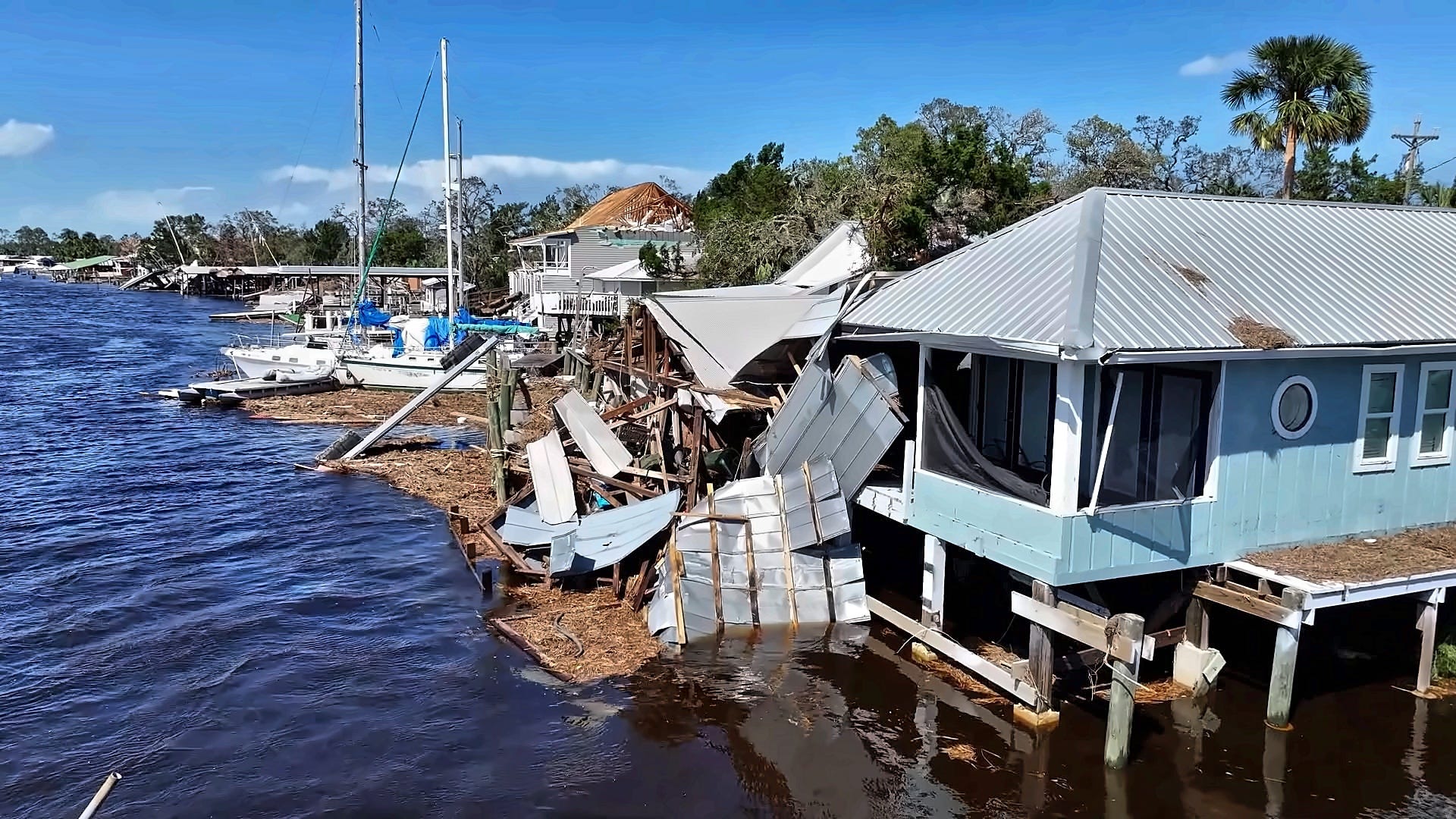
The National Weather Service measured Helene’s surge along coastal Pinellas at roughly 4 to 7 feet above the normal high tide line. Twelve people in the county died from storm surge drowning. The worst of it landed on the narrow, 20-mile string of barrier islands along the Gulf, but the bay side flooded too. Shore Acres in St. Petersburg, the old cottage streets of Gulfport and the Dunedin waterfront all took water that longtime owners had never seen.
County damage assessments in the weeks after counted 28,350 damaged homes from Helene, including 268 destroyed and 16,803 with significant damage.
Milton came thirteen days later. It made landfall on Siesta Key as a Category 3 on October 9 and brought wind instead of surge to Pinellas. Gusts topped 100 miles per hour in downtown St. Petersburg, enough to shred the roof of Tropicana Field. The county’s early tally added 12,560 more damaged homes, 446 of them destroyed. Some houses that had flooded during Helene came apart in Milton.
Together, that is more than 40,000 Pinellas homes with storm damage in under three weeks.
Here is the part buyers miss. The damage is mostly repaired, cleared or demolished now. What remains is the paperwork, the permits and a federal rule that decides which houses on a given street get repaired, which get raised, and which get bulldozed.
The 49 percent rule that redrew every waterfront street
Most people call it the FEMA 50 percent rule. In unincorporated Pinellas County it is effectively a 49 percent rule, and it is the single most important thing to understand before you buy anything near the water here.
The idea is simple. If a home sits in a flood hazard area and the cost to repair it reaches 49 percent or more of the structure’s pre-storm value, the county treats it as substantially damaged. The value that counts is the building alone. The land does not count, which on a waterfront lot is often most of the price. A substantially damaged house cannot simply be fixed. It has to be raised or rebuilt to meet current flood elevation standards, and Florida’s building code requires new and substantially improved homes to sit at least one foot above base flood elevation.
Think about what that means on a bay street of 1950s ranch homes. Two neighbors take the same water. One house has a modest assessed building value and a wrecked first floor, and it crosses the line. The house next door was renovated with a higher building value, or simply had less damage, and stays under. One family repairs drywall. The other family is choosing between a lift and a bulldozer.
That is why so many Pinellas streets now look like a mouth with missing teeth. Low ranches next to empty lots next to new homes standing on pilings.
Each city runs its own process. Pinellas County handles unincorporated areas and serves as the building official for several small towns, including Belleair Beach, Belleair Shore and Indian Rocks Beach. Most cities, St. Petersburg among them, make their own determinations, and the threshold and process can differ from town to town. Before you trust anything you hear about a specific house, find out which government made the call.
The lookback is gone
One change since the storms helps buyers and owners alike. Some Pinellas towns used to add up every permitted improvement over a period of years when calculating the 50 percent threshold. St. Pete Beach looked back five years. Fox 13 put it plainly at the time: a $200,000 house could absorb $100,000 in damage, but if the owner had spent $50,000 on improvements in those five years, the storm damage allowance dropped to $50,000.
In 2025 the Legislature passed Senate Bill 180, sponsored by Senator Nick DiCeglie of Indian Rocks Beach, and the governor signed it in June. It prohibits local lookback ordinances and voids the ones already on the books. A Senate effort in 2026 to roll back other parts of that law stalled in the House, so the lookback ban stands.
For a buyer, that means a newer kitchen no longer counts against you after the next storm the way it once did in some towns.
A deadline arrives with the new year
Owners in the county’s jurisdiction who received substantial damage letters after Helene or Milton have until December 31, 2026, to comply. If you are shopping now, you may see unrepaired homes come to market from owners who have decided not to rebuild. Some will be real opportunities. Some will be lots wearing a house as a costume. Knowing which is which is the whole job.
Three kinds of houses on the water now
When I walk a waterfront street with a buyer today, I am sorting every house into one of three groups. Each comes with its own price logic and its own risks.
The repaired original. These homes took water but stayed under the threshold, so the owners gutted and rebuilt the inside. Many look beautiful. New floors, new kitchens, fresh paint. They also still sit at their original elevation, which means they can flood again in the same way, and the 49 percent math starts over with the next storm. A repaired original can be a smart buy. It should be priced like a house that sits at its old height, because it does.
The lifted or rebuilt home. This group grew fast. The City of St. Petersburg received five home-lifting applications in 2024 and by 2025 the count had reached 92 permits, according to reporting by WUSF and the Tampa Bay Times. Before the storms, unincorporated Pinellas approved one or two elevation permits a year. One local contractor estimates lifting at about $175 per square foot before extras, which puts a 1,500 square foot home north of $250,000. New homes on pilings or raised fill cost more to build and tend to list higher. In exchange, the living space sits above the flood elevation, the flood insurance math is usually far kinder, and the next surge is mostly a garage and driveway problem.
The unrepaired or substantially damaged house. Some owners waited for state money. Roughly 3,700 Pinellas households applied to the Elevate Florida program, and only about 360 were moving ahead as of mid-2026. Others decided to sell rather than rebuild. These properties are, in practice, land deals with a deadline attached. The buyer inherits the obligation to elevate, rebuild or demolish, and the price should reflect the full cost of that path, plus time. Gulfport alone had recorded 32 demolitions by the fall of 2025.
The mistake I see most often is a buyer comparing these three kinds of homes by price per square foot as if they were the same product. They are not. A $1.4 million repaired ranch and a $1.9 million elevated rebuild on the same canal can be very different values once you add insurance, future risk and resale.
Flood insurance and disclosure: the new ground rules
The insurance side changed as much as the streets did. Four things matter most right now.
Sellers now have to tell you about flooding in writing. Since October 1, 2024, Florida sellers of residential property must give buyers a flood disclosure at or before the time the contract is signed. It asks whether the seller has filed a flood insurance claim, including with the National Flood Insurance Program, and whether the seller has received federal assistance such as FEMA aid for flood damage. A 2025 update, effective October 1, 2025, added a question about whether the seller knows of any flooding that damaged the property during their ownership. The form is a starting point. It covers only the current owner’s time in the house, so ask for more.
Citizens customers will all need flood coverage on January 1. Florida’s state-backed insurer has been phasing in a flood requirement since 2023. Homes in FEMA flood zones came first, then homes by dwelling value: $600,000 and up in 2024, $500,000 in 2025, $400,000 in 2026. Starting January 1, 2027, most remaining Citizens personal residential policies with wind coverage must carry flood insurance to renew, regardless of flood zone. Condo unit owner policies are the main exception. If you are buying a single-family home that will be insured through Citizens, budget for flood insurance even if the house is miles from the water.
A seller’s flood policy can travel with the house. Under FEMA’s current pricing system, Risk Rating 2.0, a National Flood Insurance Program policy can be assigned to the buyer at closing, and with it any discount the seller still enjoys. Most NFIP rate increases are capped at 18 percent a year. On an older waterfront home, assuming the seller’s policy can cost far less than starting a new one at today’s full rate. Ask for the current declarations page before you write an offer, not after.
Watch the federal calendar if you close in December. Congress has kept the National Flood Insurance Program alive with dozens of short extensions since 2017. The program lapsed from October 1 to November 12, 2025, during the federal shutdown, and no new federal flood policies could be sold or renewed in that window. Its current authorization runs through December 11, 2026. If your closing depends on a new NFIP policy and falls near that date, line up the policy early and talk with your lender and insurance agent about a backup plan, including private flood coverage.
One more local detail is worth knowing. Unincorporated Pinellas County holds a Class 2 rating in FEMA’s Community Rating System, the highest in Florida, which gives NFIP policyholders there up to a 40 percent discount. St. Petersburg and Dunedin are Class 5 communities, worth about 25 percent. Those discounts depend on the community enforcing the substantial damage rules. After Hurricane Ian, FEMA stripped Fort Myers Beach of its discount and put the town on probation for improper rebuilding. Strict rules can feel like a burden to a homeowner. They also protect every neighbor’s premium.
What the market is doing
If you expected Pinellas prices to fall apart after two hurricanes, the data says otherwise.
The Pinellas single-family median sale price was $464,950 in August 2026, up 6.9 percent from a year earlier, according to Suncoast Tampa Association of Realtors figures drawn from Stellar MLS. Active single-family listings fell 18.5 percent year over year to 3,050, which works out to about 3.5 months of supply. The median home went under contract in 37 days, down from 48.
Condos tell a different story. Condo and townhome supply stood at 6.4 months in August, and the median took 74 days to go under contract. Older coastal buildings face new state inspection and reserve requirements on top of storm repairs, and buyers have noticed.
The wildcard is money. The Federal Reserve raised rates in September for the first time since 2023, and Freddie Mac’s 30-year average reached 7.28 percent on November 19, 2026, a full point higher than a year ago. Higher rates squeeze every price point, but they hit hardest where buyers also carry big insurance bills.
On the water, all of this points to a split market. Elevated, well-documented homes with clean disclosures and assumable flood policies give buyers confidence, and confidence is what sells a house at 7 percent. Unrepaired or poorly documented homes give buyers questions, and questions become price. For a prepared buyer, that gap is where the opportunity lives.
Seven questions to ask before you write an offer
These are the questions I want answered on any waterfront home before a buyer commits. None of them require a law degree. All of them require asking before the inspection period runs out.
1. Did this house get a substantial damage letter? Ask the seller directly, then confirm with the city or county that has jurisdiction. In unincorporated Pinellas and the towns the county serves, a lookup tool on the county website shows mailed determinations. If there was a letter, find out whether the home has been brought into compliance and whether that work was permitted and finaled.
2. Where does the finished floor sit compared with base flood elevation? The answer lives on an elevation certificate. Many sellers have one. If not, a surveyor can produce one, and it is money well spent. That single number drives your flood premium and your risk.
3. What does the flood disclosure say, and what does it leave out? The state form covers claims, federal aid and known flooding during the seller’s ownership. Ask what happened before that, ask neighbors, and look at the home’s permit history for storm repairs.
4. Can I assume the seller’s flood policy? Get the declarations page, the premium and the renewal date. Then get your own quote and compare.
5. Who will insure the house against wind, and does that insurer require flood? If the answer is Citizens, flood coverage becomes mandatory on January 1, 2027, for nearly every single-family policy.
6. Were the storm repairs permitted? Pinellas County ran an after-the-fact permit program and warned that unpermitted work could put the community’s flood discount at risk. Unpermitted repairs can also become your problem at the next sale.
7. If this house floods again, what is my plan? For a repaired original, that might mean a budget to elevate someday. For an elevated home, it might mean knowing what sits below the living space and how it is insured. Buyers who answer this one honestly almost never regret the house they choose.
Still worth it
I have lived in Dunedin since 2013. I sell historic, character and waterfront homes across Tampa Bay, and nothing about the last two years has changed my view that a well-chosen house on the water here is one of the great ways to live in Florida.
What changed is how you choose it. The romance of the view now has to share the table with an elevation certificate, a flood disclosure and a permit history. Buyers who do that homework can find homes standing stronger and higher than much of what lined these streets before Helene.
If you are weighing a waterfront purchase anywhere in Pinellas, Hillsborough or Pasco, I am glad to walk a street with you and sort the houses the way I described here. You can reach me through middletontampabay.com or at 727-871-7653.
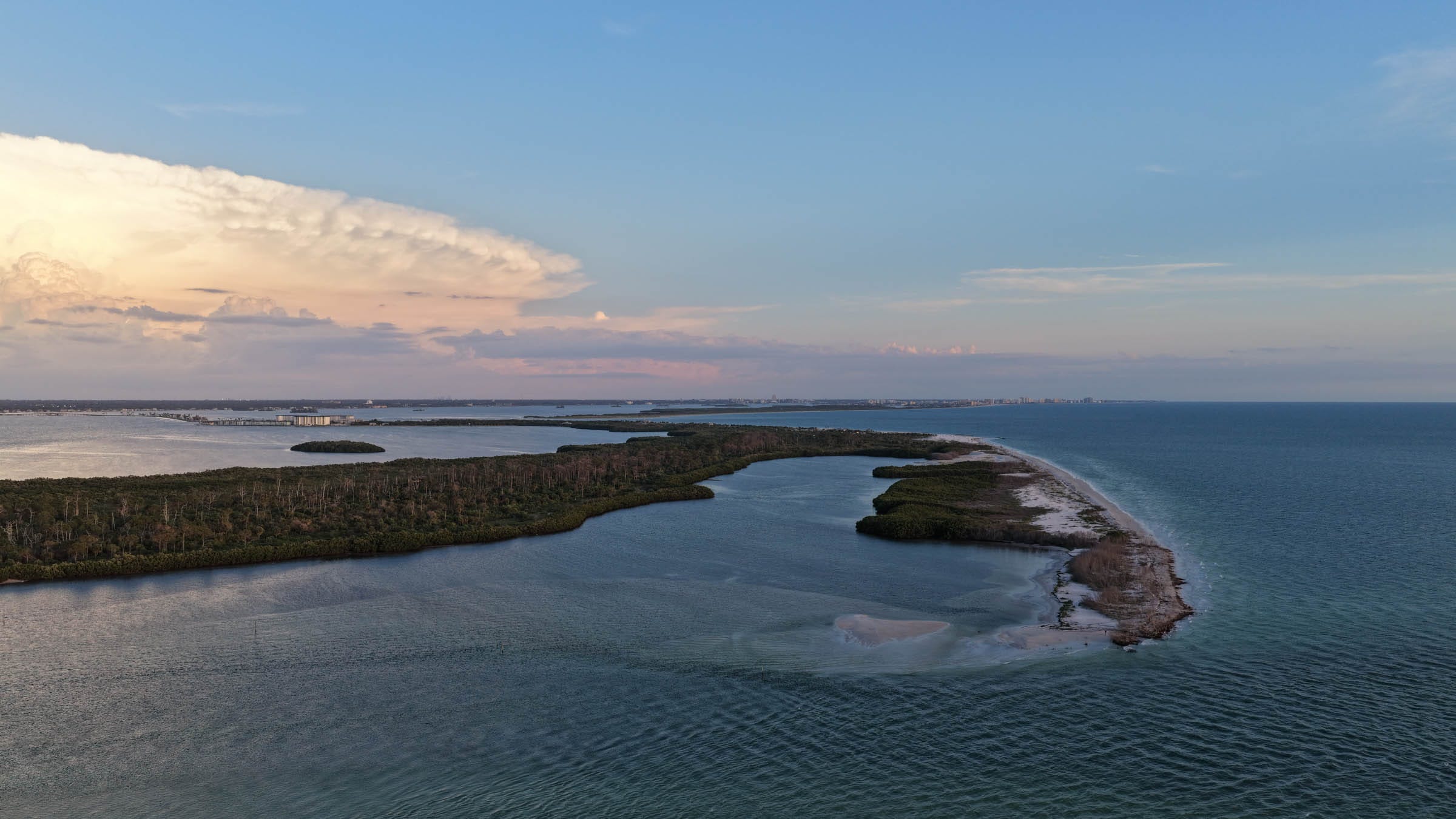
On a calm evening you can stand on the north tip of Caladesi and look across Hurricane Pass to Honeymoon Island. A century ago that water was dry land on Hog Island. Today boats run through it side by side, and on both shores people spread their towels in the sun as if the pass had always been there.
This is the most useful checklist I have seen for Pinellas buyers since the storms, and your question 6 is the one I would underline twice. In claims practice, unpermitted storm repairs are where a later claim quietly falls apart. The carrier asks for the permit history, the work cannot be verified, and the estimate gets cut to what can be documented, or the loss gets blamed on the repair rather than the storm. The same paper trail protects a seller too. Keep the elevation certificate, the substantial damage letter and its resolution, the flood disclosure, both declarations pages, and every repair invoice with photos dated before, during, and after the work. On the insurance side, buyers should price wind and flood together before they fall in love with the house, and check whether the wind carrier requires flood, because Citizens does for nearly every single family policy starting January 1, 2027. A cheap flood quote means little if the wind policy will not renew without it.